Reconiq
Autonomous accounting employee designed to verify invoices, detect financial inconsistencies, and streamline AP operations in real time.
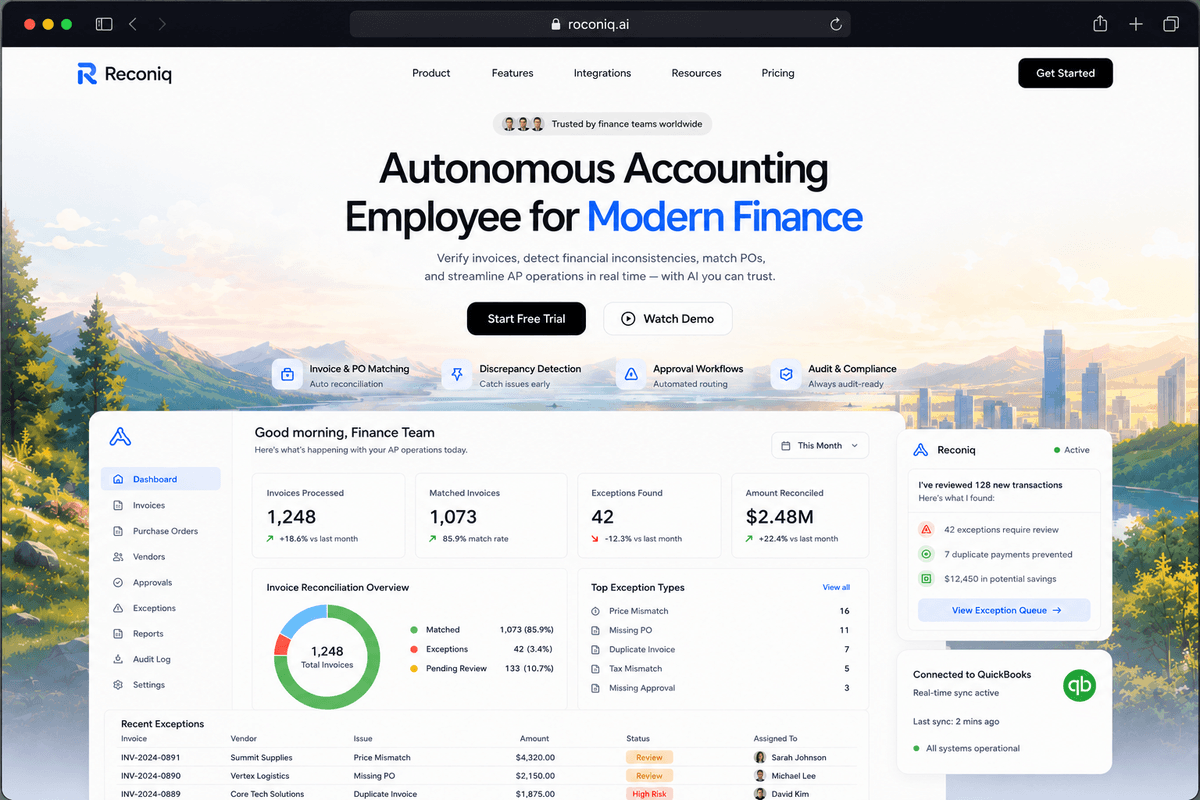
Finance teams still rely on manual reconciliation workflows.
Spreadsheets, email approvals, fragmented accounting systems, and time-consuming invoice reviews. As transaction volume grows, AP operations become slower, less auditable, and increasingly vulnerable to human error.
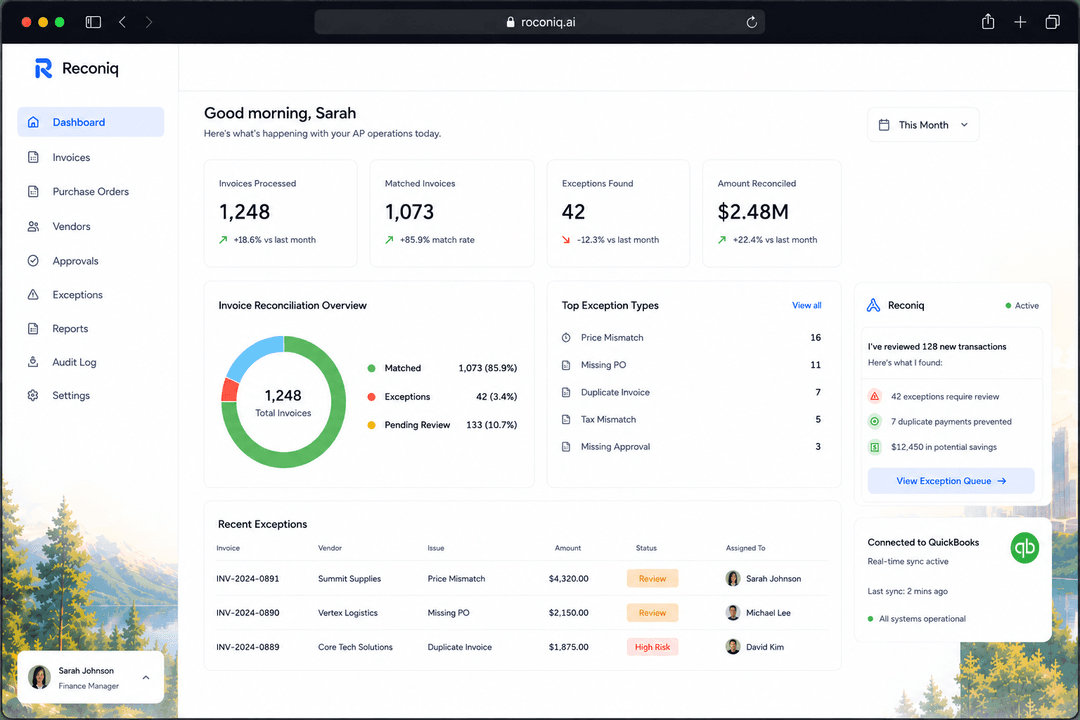
Four operational gaps that needed solving.
- 01
Invoice verification and purchase order matching are still largely manual, requiring finance teams to review documents line by line.
- 02
Accounting systems lack intelligent discrepancy detection for duplicate invoices, missing approvals, and inconsistent transaction data.
- 03
Financial review cycles are fragmented across emails, spreadsheets, ERPs, and accounting platforms with limited operational visibility.
- 04
Finance teams struggle to maintain audit-ready reconciliation trails and scalable approval workflows as transaction volume increases.
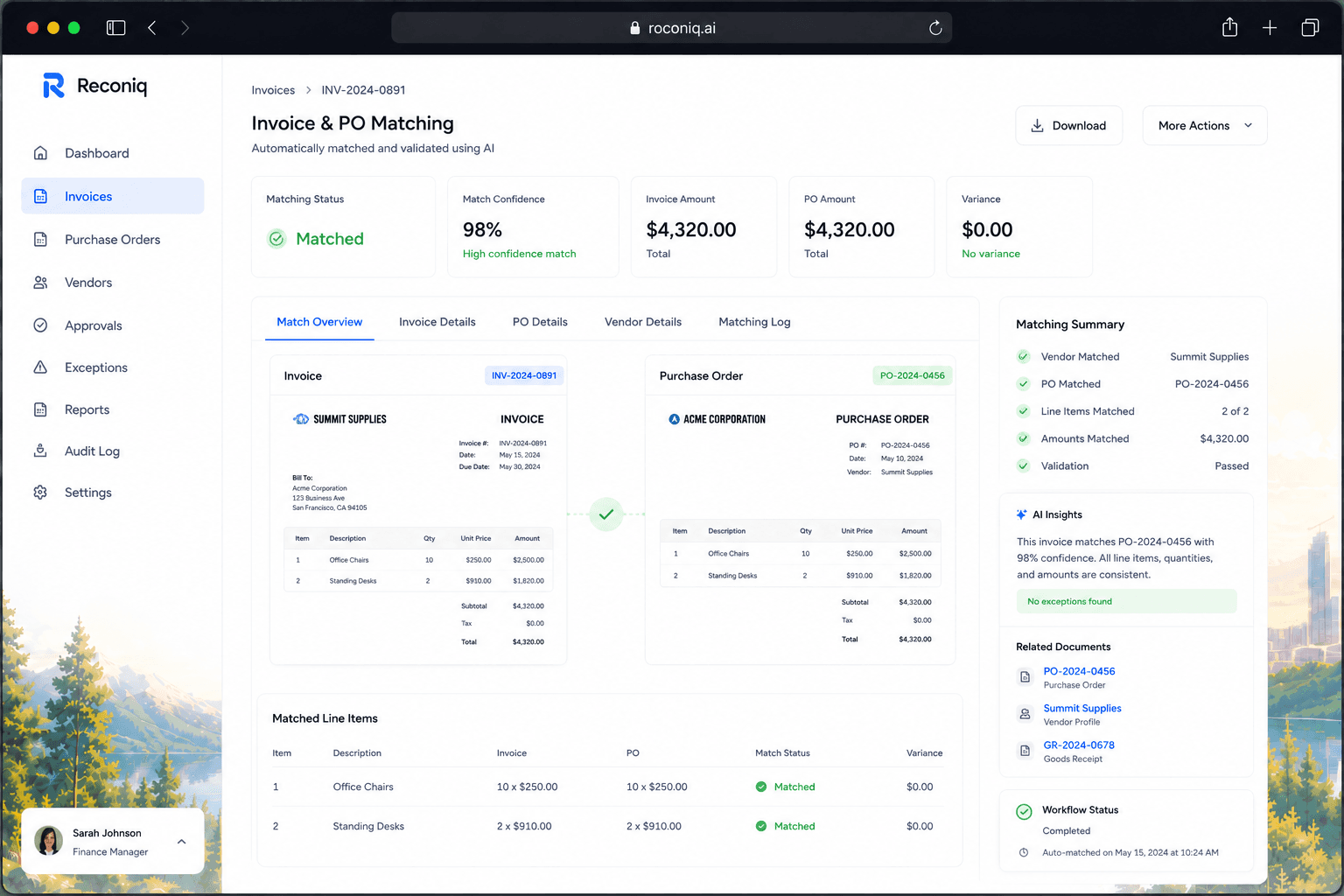
Building an autonomous financial operations layer.
Instead of creating another accounting dashboard, I designed an autonomous workflow system capable of validating invoices, reconciling purchase orders, detecting operational anomalies, and coordinating approval workflows in real time.
- Invoices are automatically matched against purchase orders, vendor records, and transaction history
- Discrepancies, approval gaps, duplicate payments, and anomalous transactions are surfaced in real time
- Finance teams manage exceptions through structured review queues and approval workflows
- Real-time synchronization with QuickBooks ensures accounting records remain consistent across systems
- Audit logs and reconciliation history provide operational traceability for finance and compliance teams
Four pillars that make it work.
01
Autonomous Reconciliation
The system continuously validates invoices against purchase orders, transaction records, and vendor data without requiring manual review.
02
Financial Exception Detection
Operational inconsistencies including duplicate invoices, missing approvals, payment variances, and anomalous transactions are automatically identified and flagged.
03
Approval Workflow Automation
Dynamic routing and structured review queues streamline AP approvals while maintaining operational controls and escalation paths.
04
Audit & Compliance Visibility
Every reconciliation action, approval event, and discrepancy resolution is logged through traceable, audit-ready workflows.
Components powering the financial operations workflow.
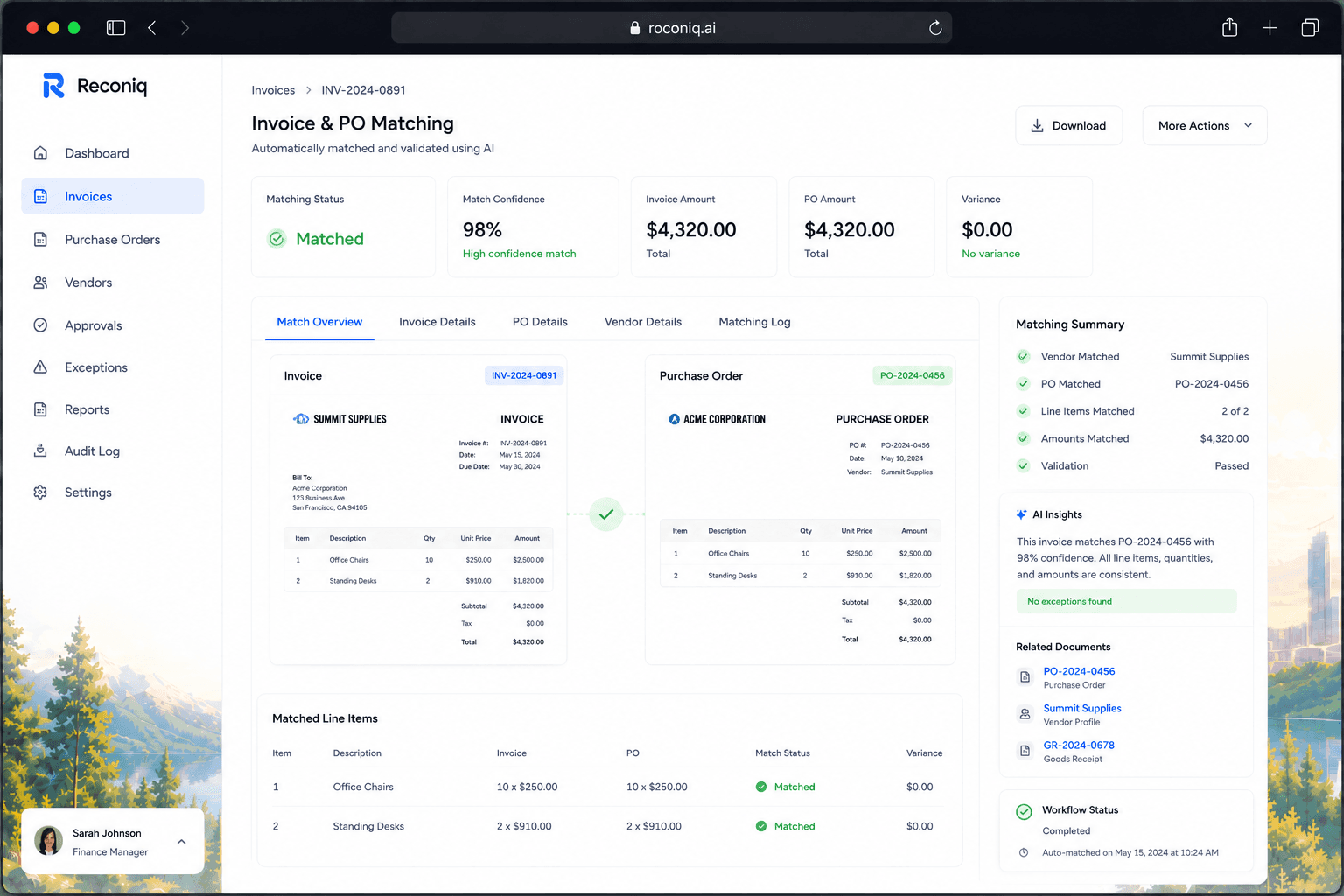
01 / 05
Invoice & PO Matching Engine
Invoices are automatically reconciled against purchase orders, vendor records, and accounting data using intelligent document matching and transaction validation workflows.
02 / 05
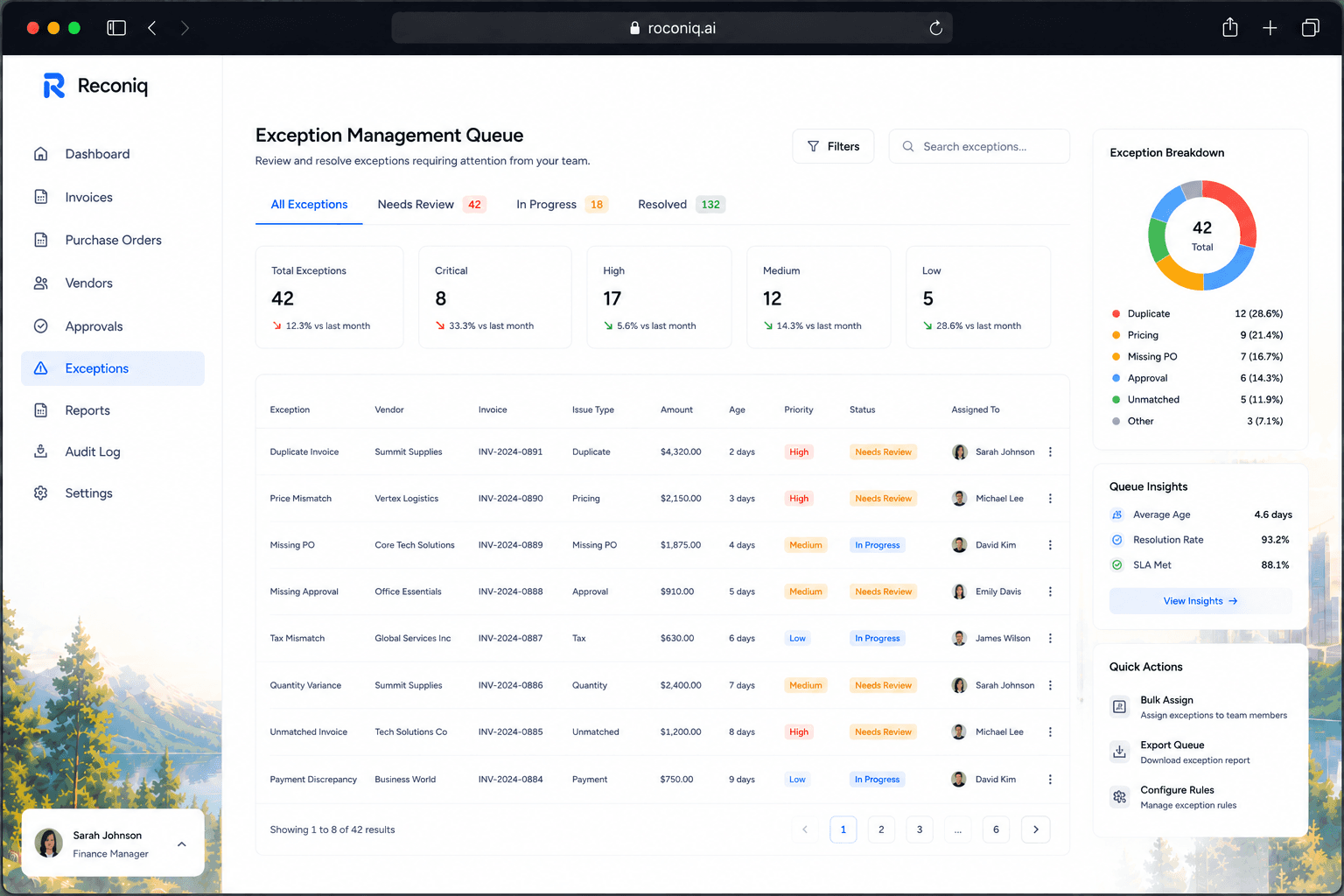
Exception Management Queue
Discrepancies including duplicate invoices, pricing inconsistencies, missing approvals, and unmatched transactions are surfaced through centralized operational review queues.
03 / 05
Approval Orchestration Layer
The platform coordinates multi-stage approval workflows with escalation logic, reviewer assignments, and threshold-based routing for finance operations.
04 / 05
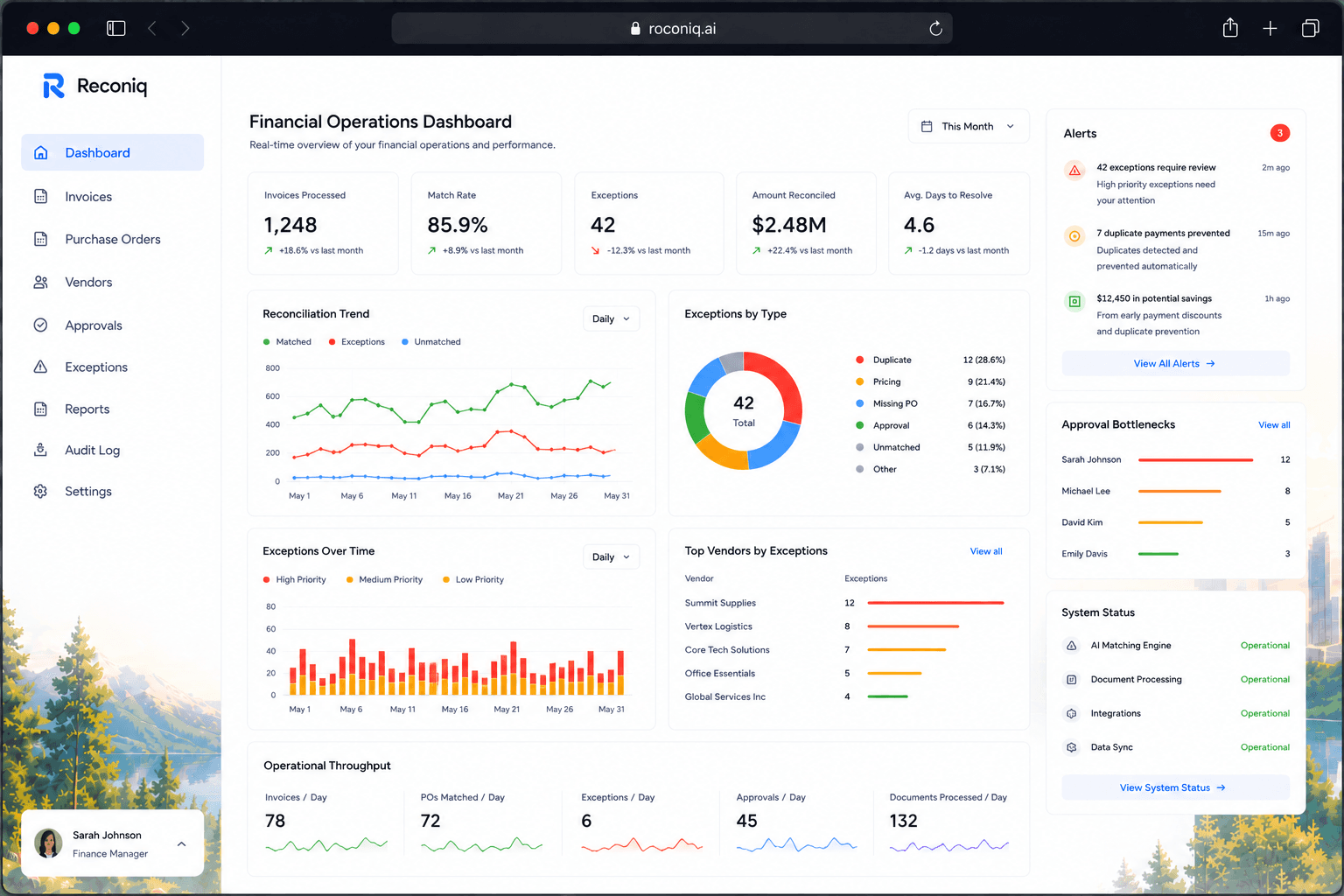
Financial Operations Dashboard
Finance teams gain visibility into reconciliation status, unresolved exceptions, approval bottlenecks, and operational throughput in real time.
05 / 05
Audit & Traceability System
Every financial action is recorded through structured audit logs, reconciliation history, and approval timelines to support compliance and operational accountability.
The intelligence layer powering financial operations.
Intelligent Document Extraction
Structured invoice and transaction data is extracted and normalized from financial documents to enable downstream reconciliation and verification workflows.
LLM-Orchestrated Finance Workflows
LLM-based orchestration coordinates reconciliation logic, discrepancy analysis, approval routing, and exception summarization across accounting workflows.
Contextual Financial Verification
The system validates invoices against purchase orders, historical transactions, vendor records, and operational rules to detect inconsistencies and missing financial context.
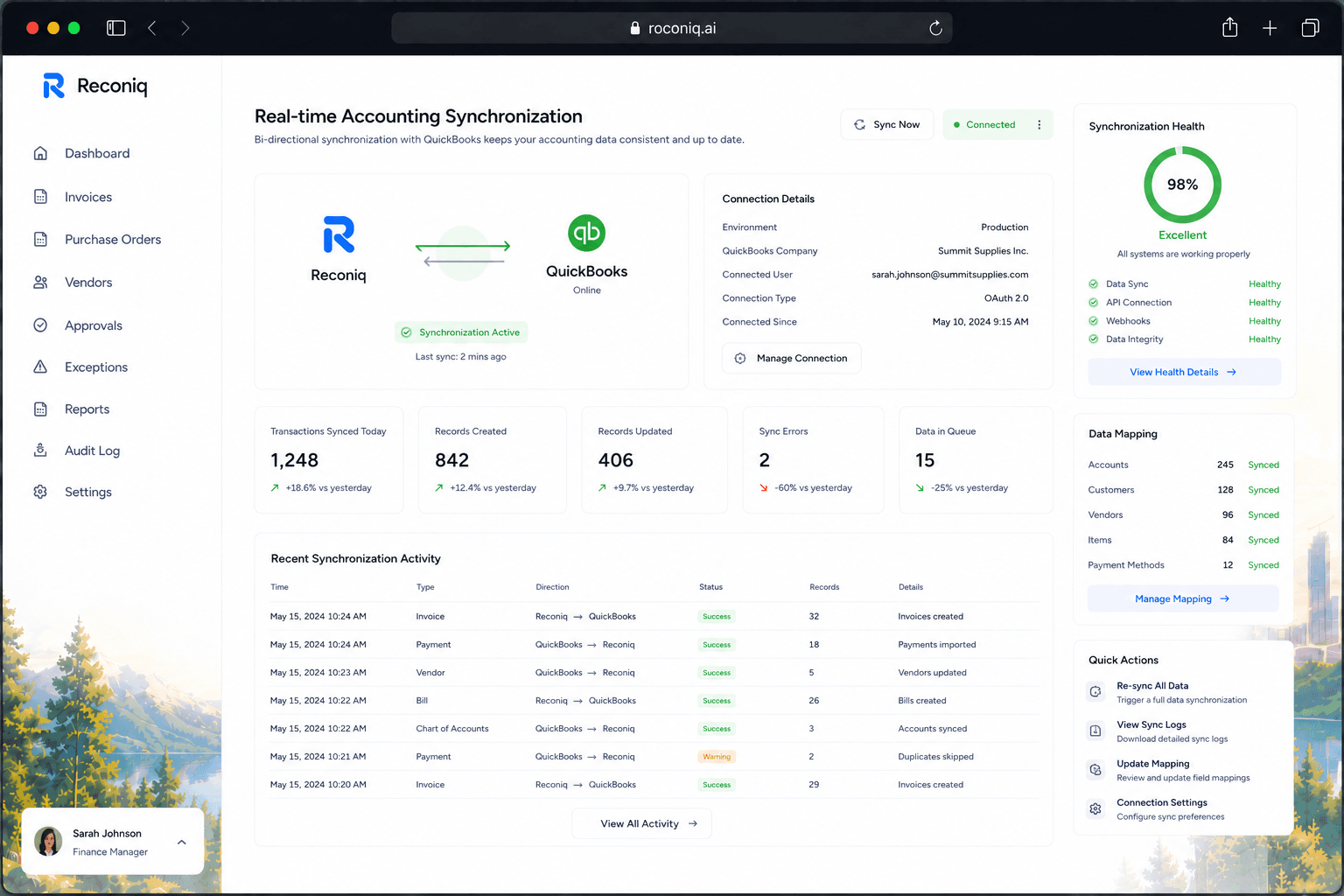
Real-Time Accounting Synchronization
Bi-directional synchronization with QuickBooks maintains accounting consistency across reconciliation workflows, approvals, and operational reporting.
Reconiq explores what finance operations look like when reconciliation, verification, and exception handling become autonomous systems instead of fragmented manual workflows — shifting teams toward higher-leverage oversight and decision-making.