Chipi AI
Building an AI-native learning system for K–12 education where students learn by interacting with intelligent systems.
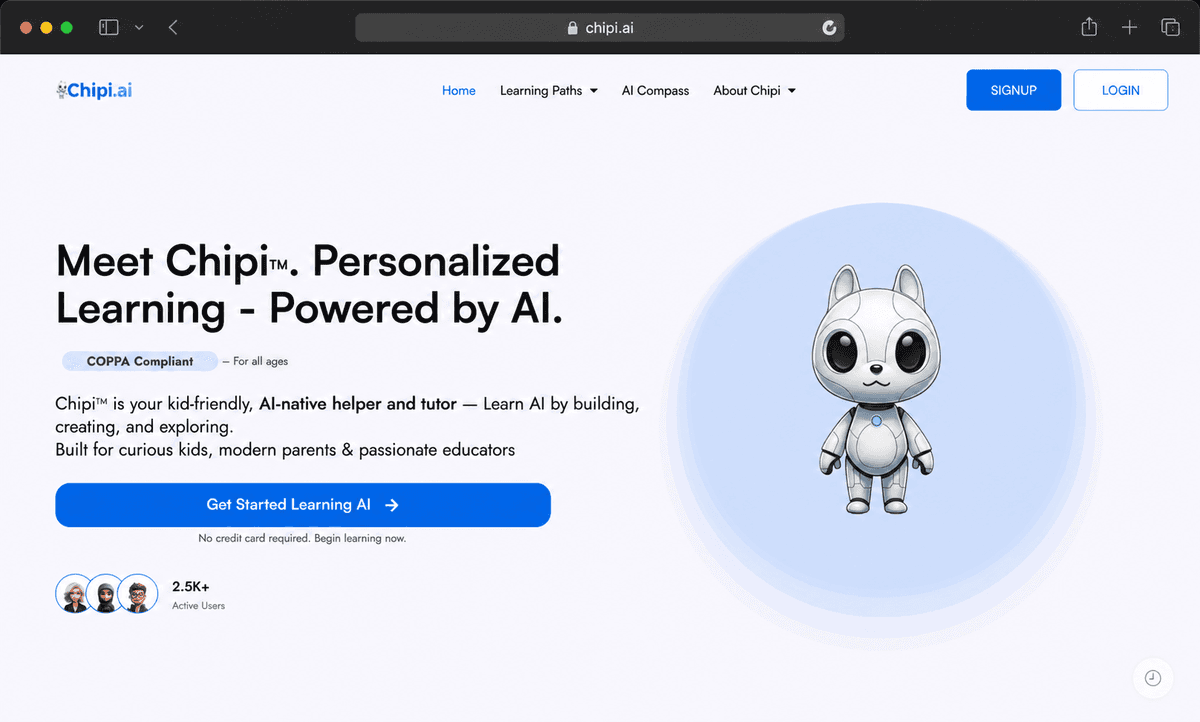
Existing EdTech treats AI as supplementary content, a video to watch, a quiz to pass.
Current platforms don’t fully enable K–12 students to engage with AI as a collaborative thinking partner in a safe, teacher guided environment.
Four gaps that needed solving.
- 01
Learning is mostly passive videos, quizzes, and static lessons with no real AI interaction.
- 02
No safe, structured environment for children to interact meaningfully with AI systems.
- 03
Teachers have zero visibility into how students engage with AI-driven content.
- 04
No progression model for AI reasoning no way to develop prompt-thinking skills systematically.
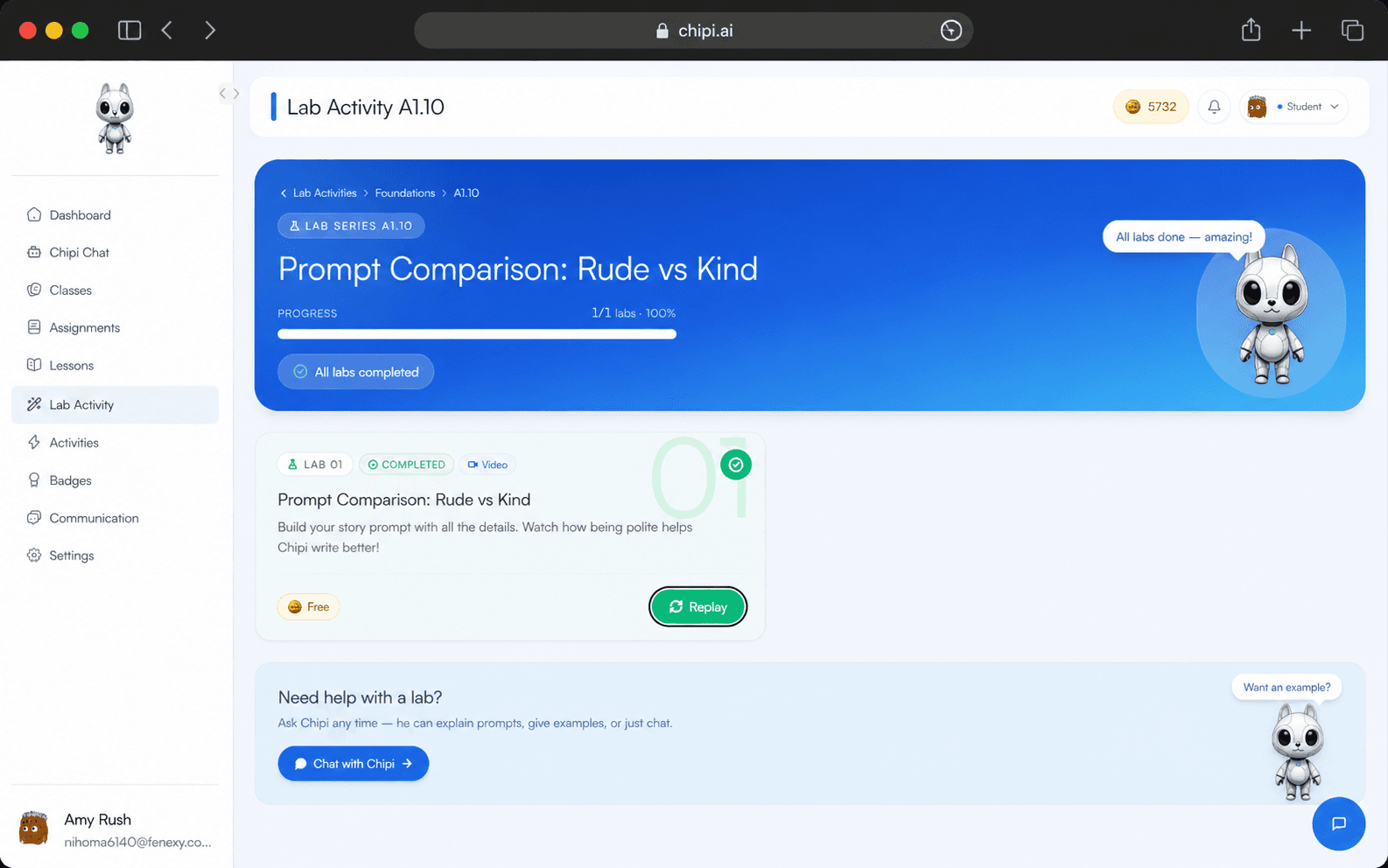
Interaction as the medium of learning.
Instead of positioning AI as a passive subject, I designed a structured learning system where students actively develop foundational AI literacy through guided, hands on interaction and carefully sequenced exercises.
- Students learn prompt engineering, instruction design, and model behavior through structured, teacher-assigned activities
- Teachers design learning paths, assign exercises, and track engagement and progress in real time via a dashboard
- Parents maintain visibility through progress tracking with built-in safety guardrails and controlled interaction boundaries for K–12 use
- The platform reframes AI as an interactive learning layer where students understand how models respond, reason, and generate outputs through practice
Four pillars that make it work.
01
Agent-Based Learning
Chat-driven AI agents deliver storytelling, reasoning, and creativity tasks, each calibrated to grade level.
02
Structured Curriculum
A progressive curriculum that moves from basic AI literacy to advanced prompt-based reasoning.
03
Real-Time Evaluation
AI scores and responds to student work instantly, no waiting for teacher feedback on AI tasks.
04
Role-Based System
Three distinct experiences Student, Teacher, Parent, each with the right access and information.
Components that power the learning experience.
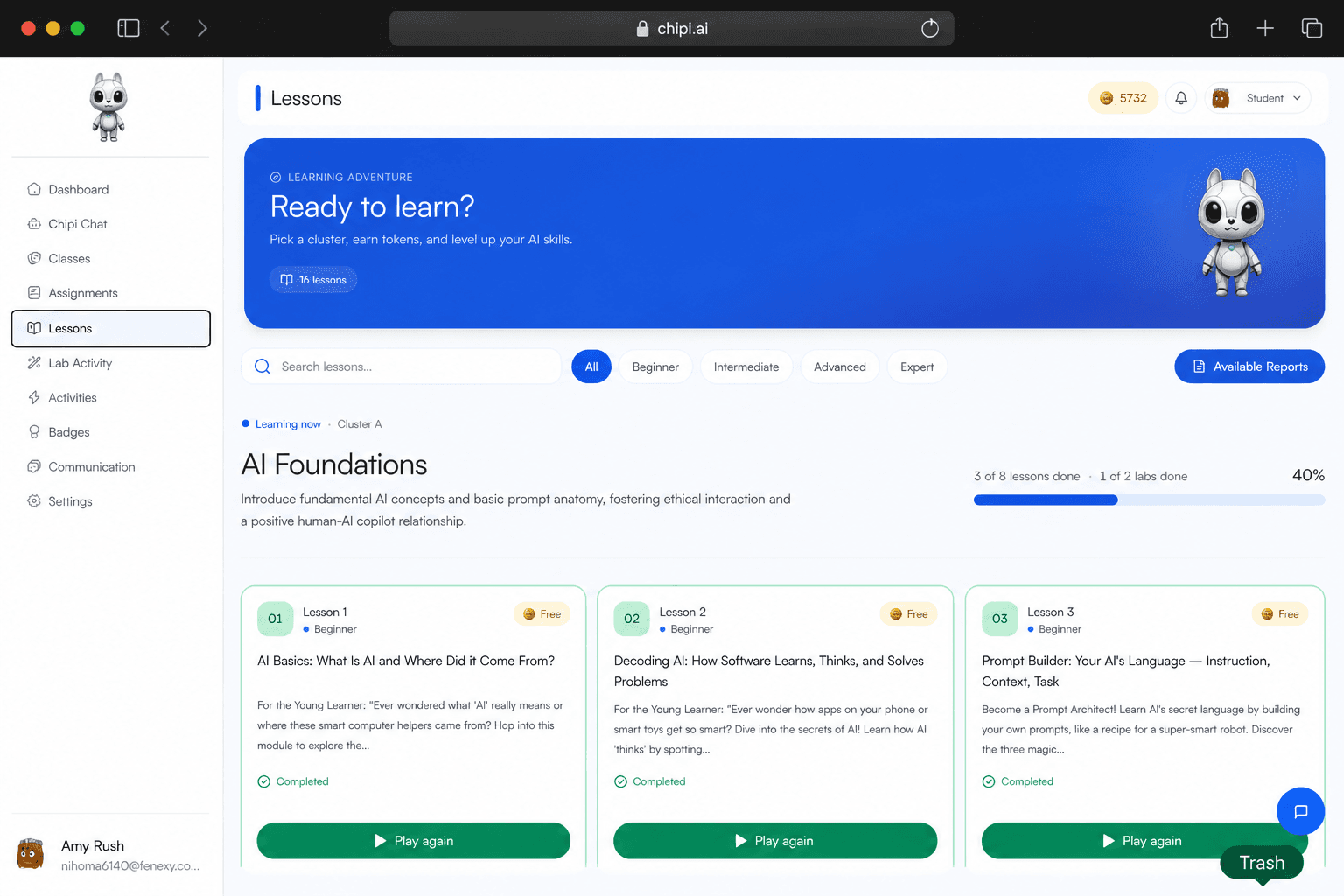
01 / 05
Guided Assignment
Teachers assign structured AI learning modules, defining guided pathways focused on prompt engineering, safe interaction, and foundational AI understanding.
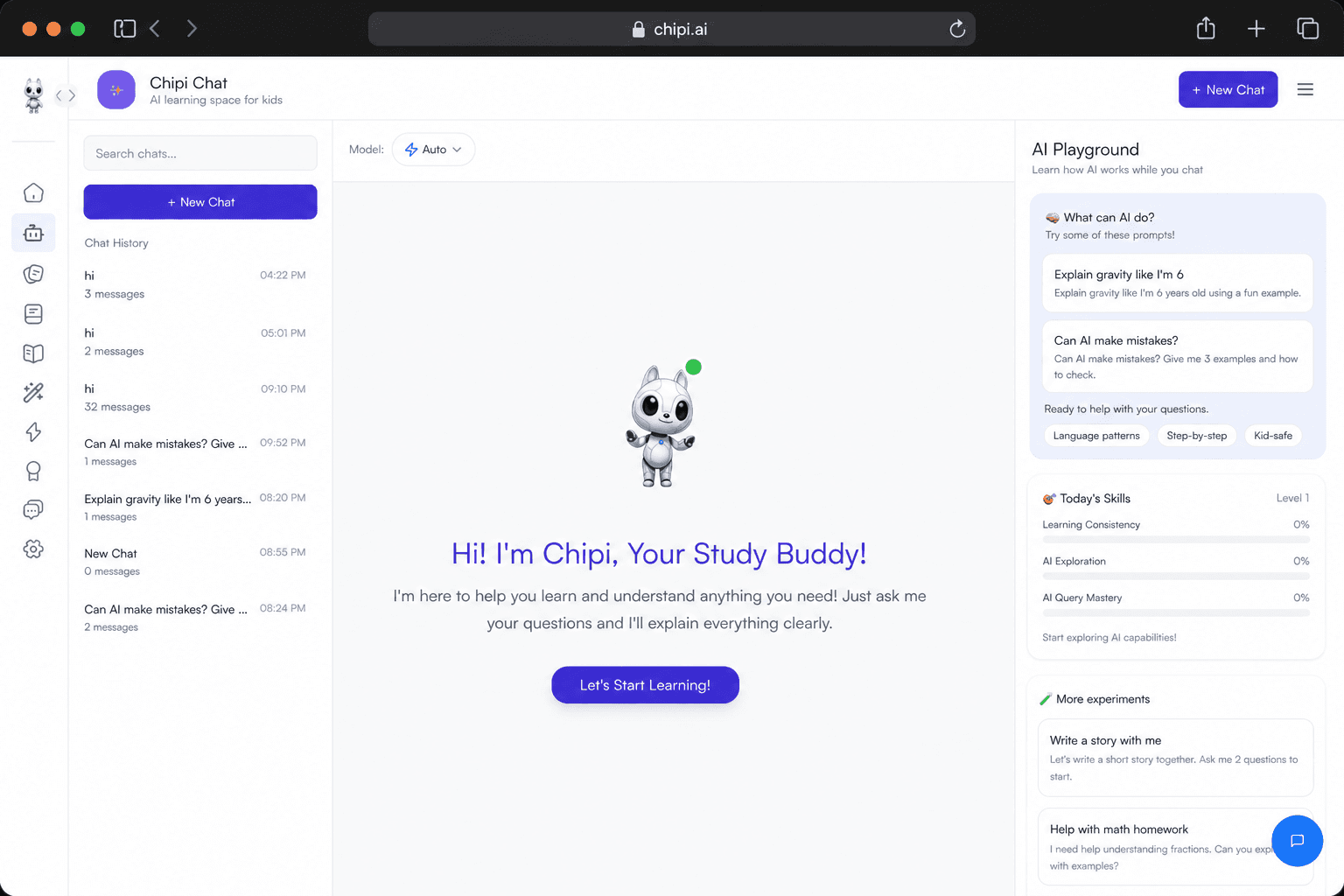
02 / 05
Chipi Chat Interaction
Students learn through Chipi Chat — a K–12 optimized AI study companion trained with safety guardrails — enabling conversational learning and controlled exploration of AI behavior.
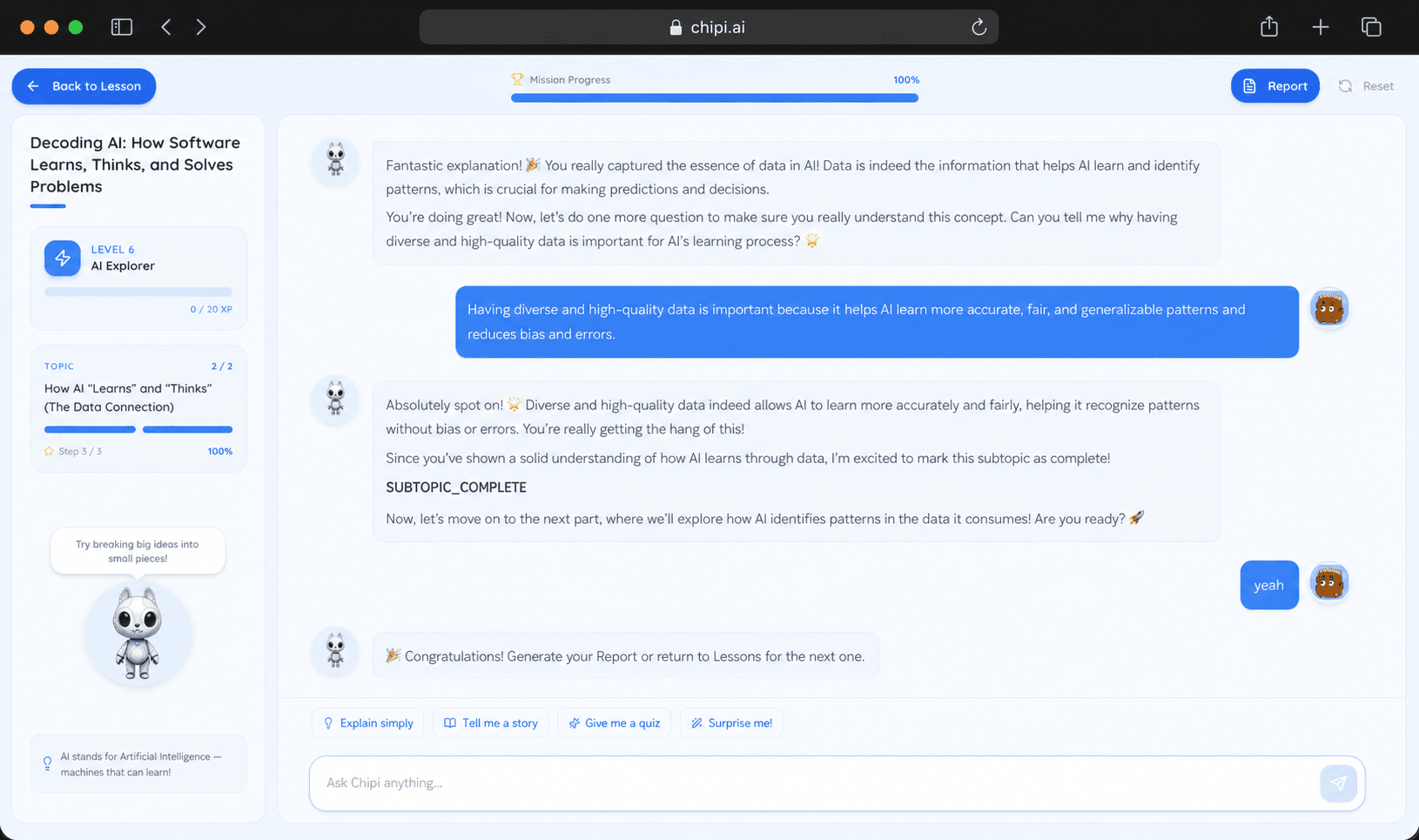
03 / 05
AI-Powered Lessons
Lessons are delivered through interactive chat-based experiences, combining natural language interfaces with structured instructional flows for deeper engagement.
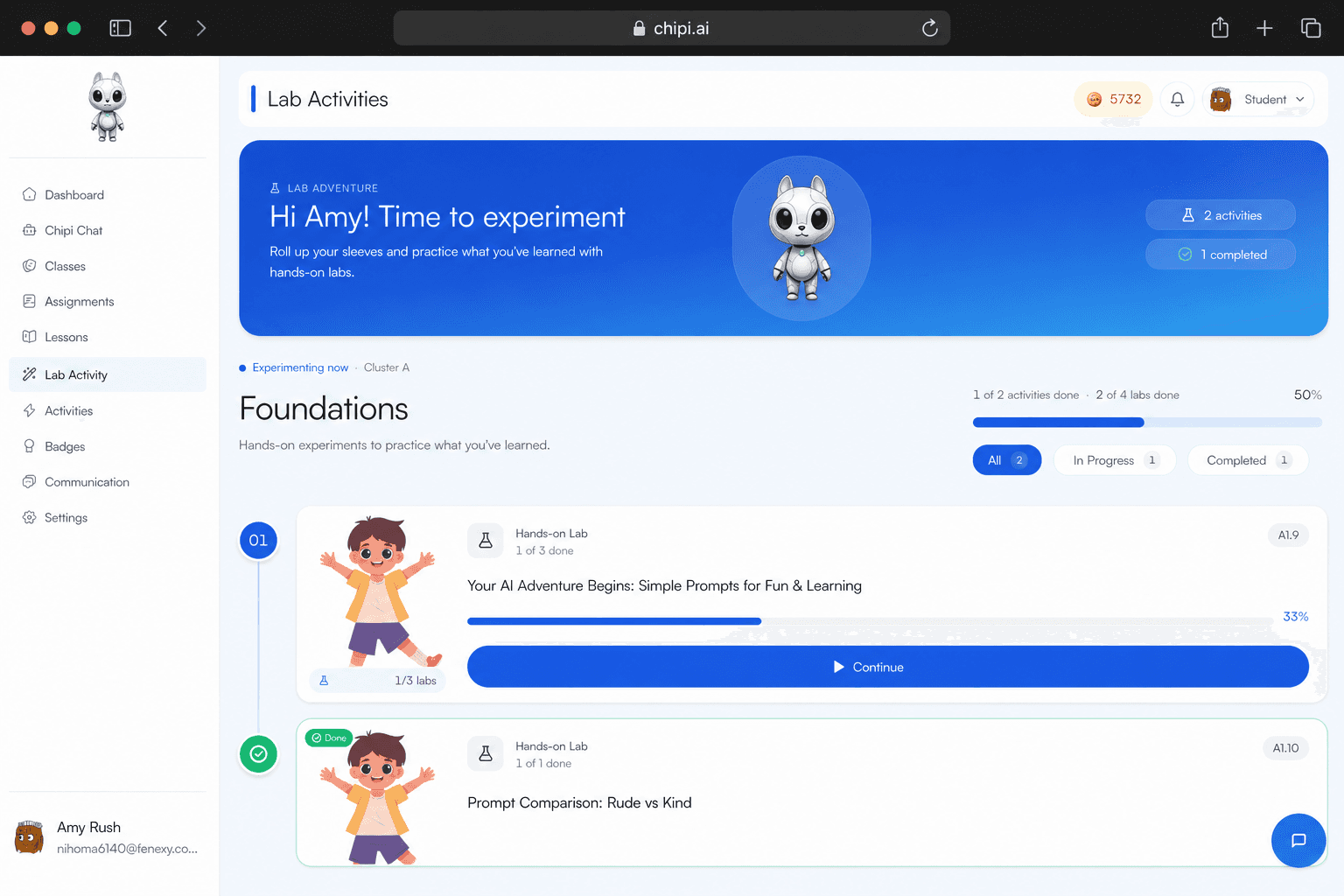
04 / 05
Applied Practice
Post-lesson activities reinforce learning through hands-on exercises, allowing students to apply prompt design, reasoning, and interaction patterns in real scenarios.
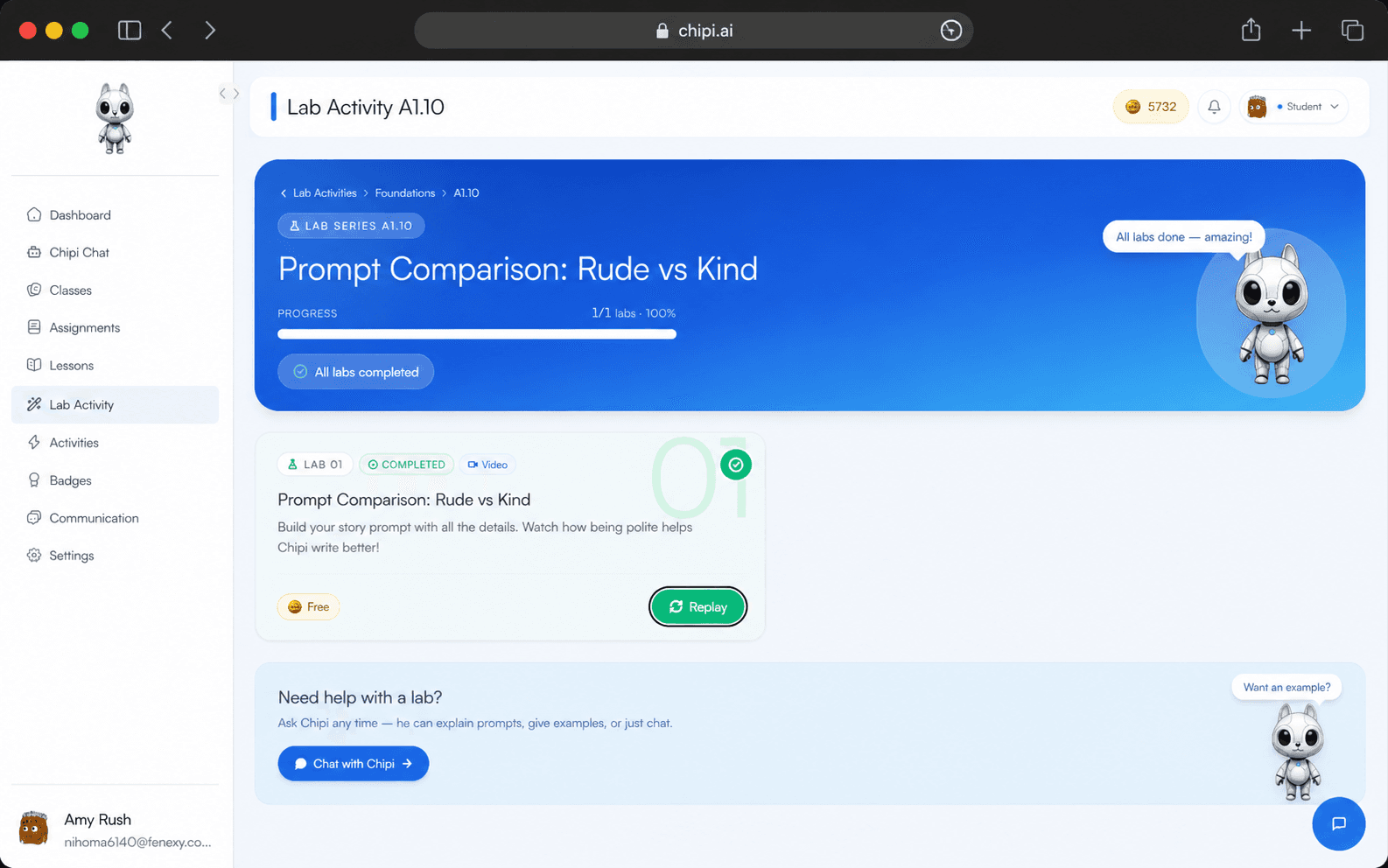
05 / 05
Safety & Visibility Layer
The system integrates robust AI safety guardrails with parent and teacher visibility, ensuring controlled interactions, content moderation, and transparent learning oversight.
The foundational components enabling intelligent interaction.
RAG
The system uses RAG pipelines to ground student interactions in curated educational content, ensuring context-aware, verifiable, and curriculum-aligned responses during learning sessions.
llm orchestration (langchain-based workflows)
LangChain-based orchestration is used to structure multi-step learning flows, manage prompt chaining, and coordinate interactions between student queries, lesson logic, and AI responses.
Embedding-based semantic retrieval
Vector embeddings enable semantic search across learning material, allowing the system to retrieve conceptually relevant content based on student intent rather than keyword matching.
Chipi AI is an exploration into how education evolves when AI becomes part of the learning loop itself not just a tool students use, but a system they learn through.